


Understanding BMW’s Inspection I vs Inspection II

BWW owners are proud motorists who’ve purchased into one of the most performant and luxurious brands in the world. The BMW ethos proudly makes the statement of being “The Ultimate Driving Machine,” and there are many who would die on the hill to uphold that phrase.
As with all motor vehicles, BMWs require a regular service schedule to keep them in prime operating condition. The only thing is that there are two types of BMW inspections that motorists need to be aware of. There is often a lot of uncertainty surrounding the two types of BMW service, and we are sure that once you’re done reading, we will have removed all doubt.
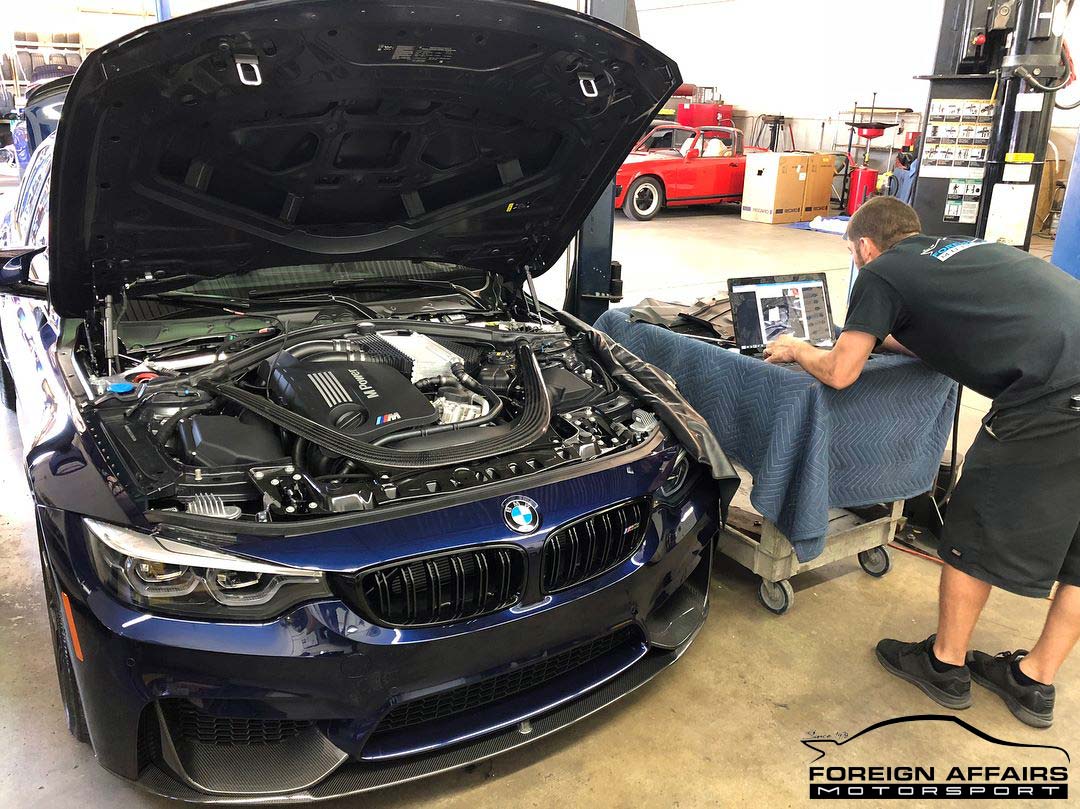
Why Are BMW Service Inspections Important?
BMW has a reputation for producing some of the finest specimens of automotive engineering in the world. Their dedication to German engineering standards and precision engineering and design means they care about the quality of their motor vehicles and the care required to keep them operating at their thoroughbred best.
When each vehicle is designed, the tolerances of materials used as well as the performance profile of each engine are taken into consideration. For this reason, not every model will have the exact same service interval, so it’s important to check this with your mechanic to understand the requirements for your specific model. Neglecting to service your BMW within the proper service intervals is a ticking time bomb, so don’t fall into the trap of putting them off.
Understanding the Differences Between the Two
As the title suggests, there are two major types of service required for your Beamer to keep it purring on South Florida’s beautiful oceanside roadways. The BMW Service Inspection I, sometimes referred to as a “minor service,” checks basic operational efficiency and safety. Service Inspection II is referred to as the “major service” and is more thorough in scope.
Inspection Service I Overview
Even though this service is considered the “minor service,” you’ll see that its scope is quite comprehensive. The inspection begins by checking all operating fluids for the motor vehicle. The oil filter and oil are changed at every service inspection; this is an essential step in keeping an engine running well. NEVER skip an oil change, regardless of what someone might tell you about it not being necessary.
The fluid levels for all essential engine fluids are checked and topped up if necessary:
- Brake Fluid
- Power Steering Fluid
- Washer Fluid
- Coolant
After the fluids have been checked, it’s time to check the undercarriage for any signs of damage and threats to safety.
This includes the following:
- Full brake check: discs/rotors, brake pads, brake lines, and any signs of leaking
- Steering components are checked out, as well as the front-end or subframe. All of the front-mounted suspension, tie rod ends, axle, and ball joints, and rubber bushings are checked for signs of wear
- The transmission and rear differential are also checked for signs of leaking
- The condition of the exhaust system is checked, as well as the rubber mounting brackets
The inspection then moves on to the electrical and safety system checks. This process is conducted with the help of a proprietary OBDII scanner supplied by BMW for their vehicle diagnostics. The system is scanned and will detect any anomalies within the car’s electrical system.
The following items are checked:
- Interior and exterior lighting are all operational
- Check for any dashboard warning lamps
- Check that all electronic instrumentation is working (infotainment system, AC, horn, etc)
- Safety belts are checked for proper operation
- Airbag units are visually examined
- Lastly, the battery voltage and load capacity are checked to prevent any unwelcome roadside pickup calls
The last remaining area of checks that are performed is for the car’s tires and body. For the tires, the wear level and pressure are checked. Inspection is also carried out for any bubbling on the sidewalls or dodgy-looking for cuts that could be a safety concern. Thereafter, the body is looked at for signs of corrosion or any other concern that may be worthy of the owner’s attention.
Inspection Service II Overview
Now we get to the so-called “major service”, or Inspection Service II. All of the checks that are done in Inspection Service I are also done in Inspection Service II, but with the replacement of the following items:
- Spark plugs (for gasoline engines only)
- Air filter – this keeps the air going into the engine clean and free of debris
- Fuel filter – this also keeps the fuel clean and ensures that no debris from either dirty fuel or the tank come into the sensitive engine internals
- Manual and Automatic Transmission fluid change – this differs for each vehicle so be sure to check with your service technician. This is often done every second Inspection Service II
Additional inspections are performed on the flexible boots around axle joins and CV joints (front wheel & all-wheel drive only) for any tears and for replacement.
The parking brake is also checked for proper function and range so that the driver does not need to apply much force for it to be effective.
Finally, a full body check is conducted to check for any rust and/or corrosion on the body. This is done in accordance with the rust prevention warranty that the driver may have purchased for their vehicle.
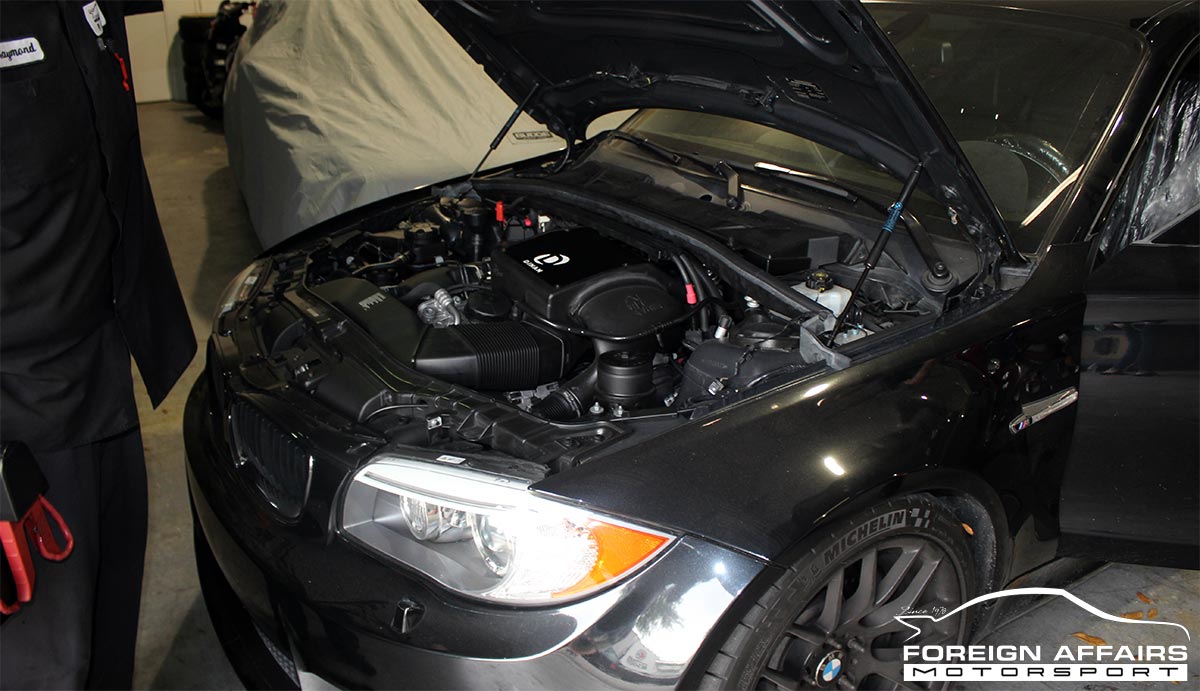
BMW Service Intervals – When Should I Do Each Service?
At Foreign Affairs Motorsports, we look after our customers’ cars as if they were our own. For this reason, we suggest an intermediate service in addition to the manufacturer’s Inspection Service I and Inspection Service II. The intermediate oil change service should be conducted every 12 months or every 10,000 miles. This will keep the car in the best possible condition for the long term.
The service interval for Inspection Service I is after the first 30,000 miles, and then it alternates with the Inspection Service II, which has its initial service at 60,000 miles. Thereafter, the two alternate every 30,000 miles, so it will be Inspection Service I again at 90,000 miles, Inspection Service II at 120,000 miles and so on.
Cost Differences Between Inspection Service I & II
There is a cost difference between the two Inspection Services as Service II involves everything that is done in Service I as well as additional items. There are also always parts replacements with every Inspection Service II. Since Service Inspection II is a major service you will need to budget ahead of time to cover approximately just over double of the cost of Service Inspection I. It’s also prudent to include a contingency in that amount of around 20% to cover any unforeseen but necessary repairs that may be required.
South Florida’s BMW Service Specialists
At Foreign Affairs Motorsport, we understand the love of European automobiles and the care that is necessary to keep them running at their best. For over 40 years, we have been looking after the BMW owners of Pompano Beach and we’d love to look after yours too. To book your beamer in for a service, call us today at 954-746-0488.